






Dr. Ashok Mishra visited our institute as a CEI visiting faculty member from May 18th to August 17th, 2026. He is the Kemper and Ethel Marley Foundation Chair in Food Management, Morrison School of Agribusiness, W. P. Carey School of Business, Arizona State University. His major research interests include agribusiness finance and management, food security, food systems, human capital development, labor and household economics, and agricultural policy. In the interview, we asked him how he gradually decided to become an economist, about his research areas, and his message to young researchers.
Q. How did you decide to become an economist? 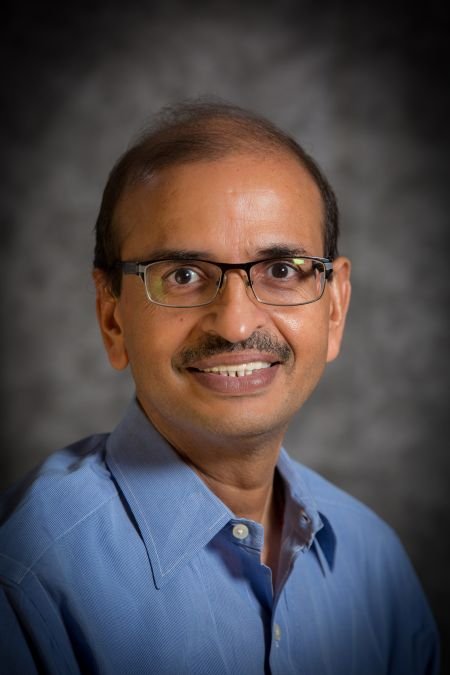
My decision to become an economist grew gradually from an interest in understanding how people make decisions under constraints, especially in rural and agricultural settings. I was always struck by the fact that many important economic decisions are made not in boardrooms or financial markets, but in households, farms, villages, and local institutions. Farmers decide what to grow, how much risk to take, whether to adopt a new technology, whether to borrow, migrate, educate their children, or invest in the future. These decisions may appear small individually, but together they shape food security, poverty reduction, and broader economic development.
My interest was also shaped by observing the challenges faced by agricultural households in developing countries. Agriculture is full of uncertainty: rainfall may fail, prices may change suddenly, pests may damage crops, and access to credit, insurance, information, and markets is often imperfect. I became interested in why some households are able to respond successfully to these challenges while others remain vulnerable. Economics gave me a framework to study these questions systematically, combining theory, data, and policy relevance.
Several teachers and mentors influenced this path. They helped me see economics not only as a technical discipline, but also as a way to ask useful questions about real-world problems. I was especially drawn to applied economics because it allows one to connect careful empirical analysis with issues that matter directly to people's lives. Over time, I came to see research as a way of contributing to better public policy, especially in agriculture, rural development, food systems, and risk management.
Q. Could you please explain your field and your research interests in words that non-academics can understand?
My research is broadly in agricultural economics and development economics. In simple terms, I study how farmers, rural households, markets, and institutions respond to uncertainty and change. Much of my work focuses on agriculture because it remains central to livelihoods, food security, and economic development in many parts of the world.
One area of my research examines risk in agriculture. Farming is naturally risky because outcomes depend on weather, soil conditions, pests, diseases, and market prices. I study how these risks affect farm decisions and what kinds of policies can help farmers manage them. For example, crop insurance, access to better information, technical advice, and improved market institutions can all influence whether farmers invest in productivity-enhancing inputs or adopt new practices.
Another part of my research looks at the role of nonfarm income and rural livelihoods. Many farm households do not rely only on agriculture. They may also earn income from wage work, self-employment, migration, or small businesses. I am interested in how these different income sources affect agricultural investment, technology adoption, and household welfare. Nonfarm income can sometimes help households take productive risks in agriculture, but it can also pull labor and attention away from farming. Understanding this balance is important for designing rural development policies.
I also study food and agricultural markets, including how prices are formed and transmitted across markets. Price changes affect both farmers and consumers. For farmers, prices influence production and investment decisions. For consumers, especially poorer households, food price volatility can affect nutrition and welfare. My work tries to understand how markets function, how information moves through them, and how institutions such as futures markets, cooperatives, or public policies can improve outcomes.
A common thread in my research is the interaction between households and institutions. Farmers do not make decisions in isolation. Their choices are shaped by access to credit, insurance, extension services, cooperatives, markets, infrastructure, and government programs. I try to study these relationships using household surveys, field-level data, market data, and econometric methods. The goal is to produce evidence that can help policymakers design institutions and policies that are more effective, equitable, and practical.
Q. Could you give a message to the young researchers in the same field?
My first message to young researchers is to choose questions that genuinely matter to them. Research is a long process, and it often involves uncertainty, criticism, revisions, and slow progress. A question that is intellectually and socially meaningful will give you the patience to stay with it. In applied fields such as agricultural and development economics, I think it is especially important to begin with a real-world problem and then use the best available theory and methods to understand it.
Second, invest seriously in data and methods, but do not let methods become a substitute for judgment. Good empirical research requires technical skill, but it also requires institutional knowledge, field context, and common sense. Before estimating a model, try to understand the people, markets, policies, and constraints behind the data. Some of the most interesting insights come from combining rigorous methods with a close understanding of context.
Third, be open to interdisciplinary learning. Questions about agriculture, food security, climate risk, and rural development rarely fit within one discipline. They often require insights from economics, agronomy, environmental science, sociology, political economy, and public policy. Collaborating with people from different backgrounds can make research more realistic and more useful.
Finally, I would encourage young researchers to be patient and generous. Academic progress can feel slow, and comparison with others can be discouraging. But research is cumulative. Each paper, dataset, seminar, rejection, and revision teaches something. It is also important to build a community: share ideas, give constructive feedback, and learn from others. During my stay at CEI, I was reminded how valuable an intellectually open and supportive research environment can be. Young researchers should seek out such environments and also help create them for others.
Economics, at its best, helps us understand how institutions and policies affect human lives. For those working in agricultural and development economics, this responsibility is especially important because the questions often involve livelihoods, food, risk, and resilience. My advice is to remain curious, rigorous, and grounded in the real problems that motivated the research in the first place.
************************************************
Thank you, Dr. Mishra, for taking the time to answer to our questions. With extreme weather events being observed around the globe in recent years, for instance, we feel how significant and vital your research is to the world. We think your concrete messages would provide valuable insights to young researchers and students seeking to study the same field. It was our absolute honor to host you at our institute, and we sincerely wish you continued success in all your future endeavors!
(Interview answers provided by Dr. Ashok Mishra on September 10, 2026.)
 Hitotsubashi University Official Web Site ≫