






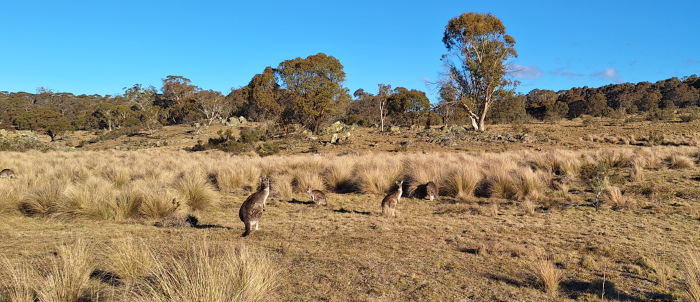
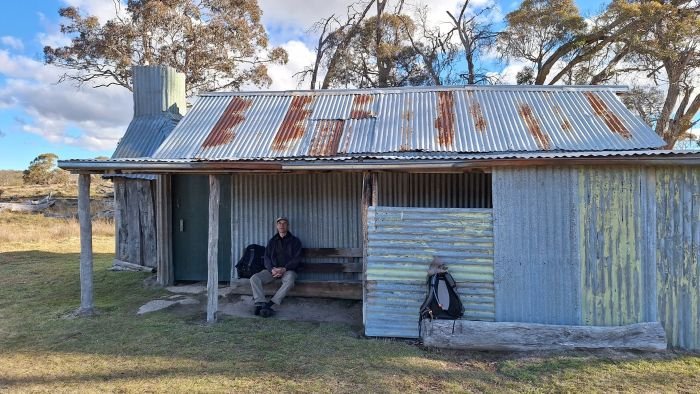
Dr. Tue Gorgens visited our institute as a CEI visiting faculty member from February 2nd to June 29th, 2026. He is a Senior Fellow (Associate Professor) of Econometrics at Research School of Economics, Australian National University. His research interests are theoretical and applied microeconometrics, including dynamic panel data models and duration/event history data. We interviewed him about how he became an economist, his research areas, his experiences living and working in different countries, and his message to the young researchers.
Q. How did you decide to become an economist?
I became an economist because I was interested in the macroeconomic issues of the day - why there is unemployment, inflation, stagflation, oil shocks and budget deficits and what can be done about it. I was interested in many other things also of course - like political science, philosophy, mathematics - so choosing economics was perhaps a bit arbitrary. But economics is a wide field so I thought one could always find something interesting to look at. And the job prospects were also good, with opportunities in both the public and private sectors. Halfway into my studies, I discovered econometrics, which was useful and exciting and challenging, so I was attracted.
Q. Could you please explain your field and your research interests in words that non-academics can understand?
My field is econometrics, which is often described as the intersection of economics and statistics. In applied econometrics, we use data to discover economic patterns. These patterns can be used to predict future outcomes, such as the rate of inflation next year, or they can be used to probe `what if' questions, such as how many people might become unemployed if the minimum wage were to be raised by 10%. The data consist of numerical observations or measurements collected from individual people, families, firms, governments, etc. For example, we might study how many hours people work and how much they earn. Or how much stuff is produced and where it is sold. Of course, computers are used to manage the data and to discover the patterns.
Researchers have many questions they want answers to, and they are very creative in finding new kinds of data that can help provide answers. Often new kinds of data require new methods. Theoretical econometrics is about developing new (or better) methods for analysing data. The properties of the methods can be derived mathematically and/or studied in computer simulations.
Q. You have experiences living and working in Denmark, the U.S., Australia, and Japan. Do you find any major differences in academic and nonacademic environments among these countries? Did these experiences shape you or change you in any ways?
All four are highly developed rules-based countries where most people enjoy very comfortable lifestyles. Their academic systems are similar in that they emphasise both research and teaching, and they thrive on open discussion among academics as well as students. Ideally we are searching for some kind of truth; we are not supposed to pursue particular political or ideological or religious agendas. I think these similarities make it easy to move between countries.
The national histories and cultures are very different, of course. These are very interesting to explore. After losing control of much territory in the nineteenth century (through bombardment by the British and warfare with the Prussians), Denmark is now a much smaller country. Through trade Denmark has become rich again, and the Danes find pride in being small and perfect. Recently they were forced to rethink the relationship with Greenland - maybe the country is not so small or perfect after all?
The U.S. and Australia were both British colonies for a time. This had a strong influence on society and the national psyche (and devastated native populations). The U.S. had a war of independence, which they are proud of, but played an ugly role in the Western slave trade, the legacy of which they are still struggling with so many years later. Australia did not have a war of independence and Australians thought of themselves as essentially British until more recently. Except many Australians have a wonderfully laid back attitude to life.
An interesting aspect of Japanese history and culture is that conflict with other countries was nearly (or relatively) absent. There was a lot of warfare but it was nearly all domestic. Rules, hierarchies and ceremonies seem more important for the Japanese? I am not sure, I am no expert, but I suppose the 250 years of Edo rule with severe restrictions on geographic and social movement has left its mark. Japan had to reinvent itself to some degree after the Second World War. There may be some parallels here with the fate of Denmark after the nineteenth century wars. Even if the political and military circumstances are quite different, both had to deal with defeat and the blow to national pride and had to pick up the pieces and move on somehow.
Anyway, I didn't really mean to give a history lecture, but one way that living in different countries has shaped me is to help me question official and unofficial national narratives and cultural brainwashing. You learn a lot not only about other cultures but also about the culture you grew up in by spending time in different countries. You learn that there is more than one way to do things, that things don't necessarily have to be a certain way. It can open the mind.
Spiritual differences are also interesting, but don't grab me personally the same way as history does. And then there is the food, the arts, the music, the festivals and the languages. It is just very exciting to be in the middle of it. I think these experiences makes me happier!
Q. Could you give a message to the young researchers in the same field?
In the short term, for whatever it is worth, from my own experience and from talking with other researchers, I think good advice is to focus on what you are interested in and what you are good at. Find collaborators who can cover your weaknesses. There is no need to be an expert on everything, but it is good to be an expert on something.
In the slightly longer term, I have no idea what is going to happen and what an academic career will look like. The world is changing fast, especially with AI coming and the devaluing of `truth'. I think the role of universities in society will change. It is not clear what skills and knowledge will be needed or valued. I think what we teach and how we teach will change. As a young scholar, maybe you can play a role in shaping the future, help avoid bad outcomes, and try to make the world a better place?
************************************************
Thank you, Dr. Gorgens, for taking the time to answer to our questions. Your observations regarding living in different countries are very interesting. We think the interview would surely be helpful for the undergraduates and graduate students seeking to become researchers in economics as well as to study/work abroad. It was a pleasure to have you here at our institute, and we sincerely wish you every success in your future endeavors!
(Interview answers provided by Dr. Tue Gorgens on June 22, 2026.)
 Hitotsubashi University Official Web Site ≫